


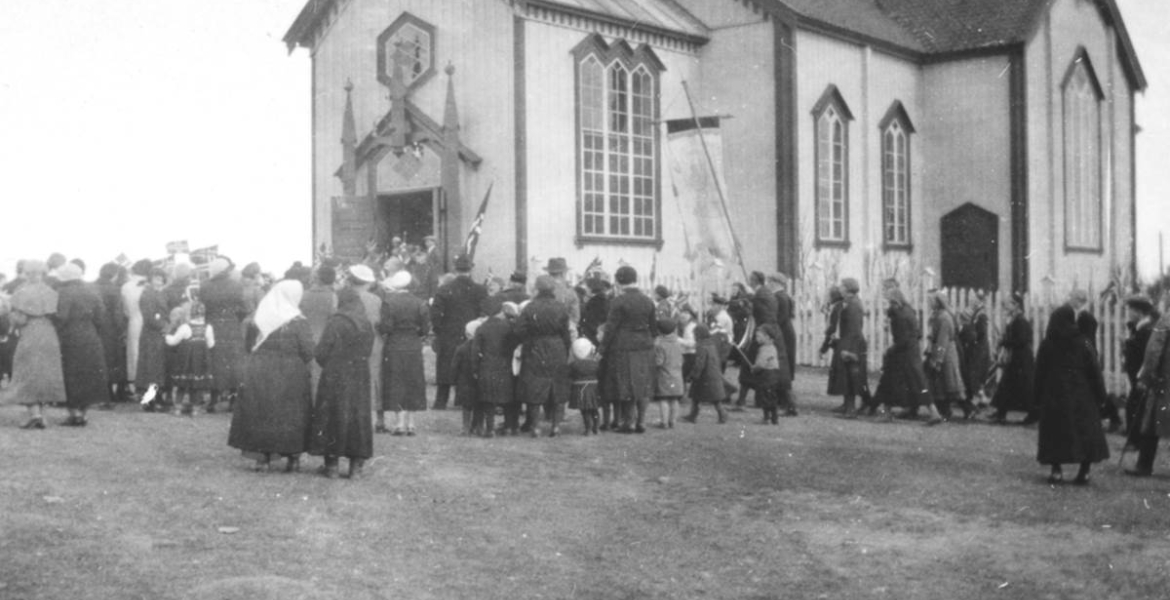
Foto: Finnmark Fylkesbibliotek
The church register, recorded by the parish priest
In the main parish register you’ll find information about a person’s christening, confirmation as a church member, marriage and burial. And usually there will be information about the individual’s parents, which will help you trace your ancestry back in time.
The Lutheran priests were state officials, responsible for recording vital records within their parish until civil registration started in Norway, and these records show various events in a parishioner’s life.
The earliest parish record in Norway is from 1623. But as it was not compulsory at that time to keep records, the contents could vary. It gradually became common practice to record religious ordinances and events, but there was no set pattern for these records until 1812, when a law was passed and printed volumes with standardized forms became available to the parish priests.
...resten av denne siden er kun tilgjengelig for medlemmer.
Logg inn for å se innholdet, eller bli medlem for å få tilgang.